Three types of mothers are likely to unintentionally raise their children to become their own 'enemies,' especially the third type.
A friend once shared that she and her mother barely spoke to each other anymore. Since childhood, she had always lived under her mother's control, from her clothes and education to her friends.
Growing up, every time she made her own decisions, her mother would say she "wasn't as well-behaved as she used to be." She once shared, "Now, just hearing my mother's voice gives me a headache."
In reality, it's not uncommon for children to gradually become distant as they grow older. Sometimes we think the child has changed, but it's possible that the parents' own behavior has subtly pushed them away. In the child's mind, the mother is no longer a close source of support, but rather someone they want to avoid.
There are three types of mothers who are more likely to strain their relationship with their children, and the third type is particularly noteworthy.
1. The "controlling" mother type, overly anxious: Many mothers start worrying about their children from a very young age, fearing they might go astray, so they interfere in everything: what they eat, what they wear, what they study, and even their future direction. This love is so great that they don't dare let go, always wanting their children to follow the "safe script" they've set.
Phrases like, "Mom did this for your own good," or "You'll understand what I'm doing later," sound very familiar. But sometimes, what is supposedly "for the child" unintentionally becomes imposing one's own will.
Some children grow up without ever truly making their own decisions. Some don't even dare to say they dislike a particular subject or hobby, for fear of disappointing their parents. Over time, the distance between mother and child isn't physical, but emotional – though close, they feel very distant.
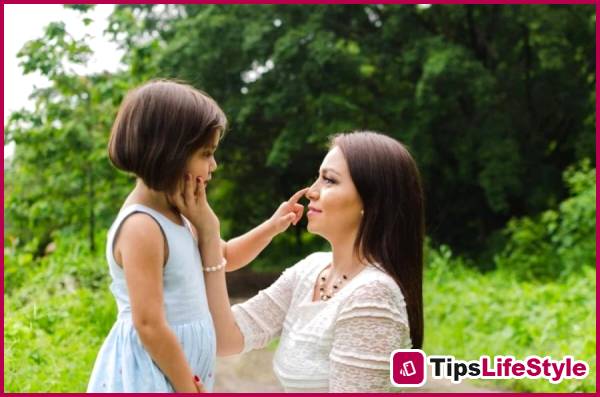 There are children who grow up without ever truly making their own decisions.
2. Stressed, easily angered, and emotionally uncontrollable mothers: These mothers often struggle, juggling work, childcare, and household chores with little support. The accumulated fatigue makes even small issues easily escalate into a breaking point.
An unfinished homework assignment, a messy room… these can all trigger emotional outbursts. But for young children, the world is simple: they don't understand that 'Mom is stressed,' but only perceive that 'Mom is always grumpy and scolding them.'
Over time, children may develop a withdrawn mindset: they are afraid to express themselves for fear of disappointing others, afraid to get close for fear of being scolded, and gradually lose self-confidence due to constant criticism. In this case, their silence or apathy is not without reason, but the result of long-accumulated emotions.
Therefore, sometimes what a child needs is not a perfect mother, but a mother who knows how to be patient, share, and maintain emotional balance in daily life.
 Therefore, sometimes what a child needs is not a perfect mother, but a mother who knows how to be patient, share, and maintain emotional balance in daily life.
3. The type of mother who talks too much, puts down, and compares her children.
This mother didn't often yell or lose her temper, but her unintentional words deeply hurt her child over time.
They often say things like, "Why are you so incompetent?", "Other people's children can do it, why can't you?"
In reality, most of these mothers don't intend to hurt their children. They simply want what's best for them, but express their expectations and anxieties by denying or comparing them to others.
However, for children, hearing repeated criticism can gradually become an invisible pressure. When constantly told, "You can't do it," a child may begin to believe they are truly incompetent. And when constantly compared to others, children easily feel inadequate and unworthy of love.
It's not loud scolding that causes hurt, but rather insensitive and prolonged words that leave deep psychological scars. Teaching children doesn't mean belittling them, and constructive criticism doesn't need to include comparisons or negation.
Sometimes, a well-timed word of encouragement or a hug can give a child the confidence to move forward. Conversely, an unintentional criticism can leave a child with feelings of inferiority that last for a long time.
If parents are more patient, listen more, and reduce their controlling behavior, children will feel that they are being supported rather than being 'corrected'.
Because in the journey of raising children, love doesn't need to be perfect — just being gentle enough is a tremendous strength.