The ancients warned: There are 3 places to absolutely avoid sleeping, as sleeping there can easily damage your health as you get older.
Sleeping position is not just a lifestyle habit; it directly affects health and well-being. Ancient wisdom points out three places to avoid as one gets older if they don't want their body to deteriorate rapidly.
Sleeping may seem like a simple thing, but the ancients considered it the "foundation of health." It's not just about lying down; where you sleep is crucial. Especially as you get older and your body weakens, you should avoid these three positions if you don't want your health to decline.
1. Sleeping directly under a window or in a drafty area.
Many people overlook this position, thinking that a cool, airy place will make it easier to sleep. However, the ancients always advised against sleeping in places with direct drafts, especially at night when the temperature drops. Cold wind blowing directly onto the body while sleeping can easily affect blood circulation, leading to fatigue and aches in the long run.
For older adults, whose immune systems are weakened, sleeping in drafty areas increases the risk of respiratory, musculoskeletal, and neurological diseases. Colds, neck and shoulder pain, and numbness in the limbs often stem from seemingly harmless habits like these.
Besides health concerns, according to folk beliefs, drafts in the sleeping area also disperse energy, hindering stability. Shallow sleep and frequent awakenings during the night are common symptoms of sleeping in this position. Therefore, the older one gets, the more important it is to choose a sleeping place that is well-ventilated and has a stable temperature.
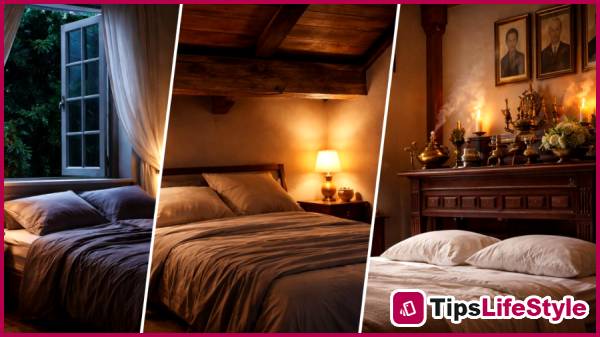 Sleeping in these places might not give you a good night's sleep.
2. Sleeping directly under a beam or low ceiling.
In both feng shui and practical terms, a beam above the bed is always considered an inauspicious position. People sleeping under a beam often feel an invisible sense of oppression, which over time affects their psychology and sleep quality.
The ancients called this the "pressure on the crown" position, which easily leads to anxiety, restless sleep, and frequent nightmares. While the effects may not be immediately apparent in young people, in older adults, this condition can easily lead to prolonged insomnia and rapid physical deterioration.
Additionally, low ceilings or cramped spaces above can reduce air circulation, making sleepers feel stuffy. In the long run, this affects cardiovascular and respiratory health. Therefore, beds should be placed in well-ventilated areas, with no heavy objects or structures pressing down on them.
3. Sleeping next to the altar.
The altar is a sacred place in every family, usually kept solemn and quiet. In the past, people particularly avoided placing beds next to or directly opposite this area, believing it could easily disrupt the necessary balance in the living space.
In reality, altars are often placed in high, less frequently used locations, yet they are places where incense smoke and the scent of sandalwood accumulate. If sleeping too close to the altar, especially in enclosed spaces, elderly people are susceptible to respiratory problems, headaches, or difficulty sleeping due to the buildup of fragrance.
From a spiritual perspective, sleeping near an altar can easily create feelings of stress and lack of relaxation. Sleep requires complete relaxation, while the worship area is associated with solemnity. Therefore, elderly people should clearly separate their resting place from their worship area to maintain long-term peace of mind.
Sleep is the foundation of health, especially as we age. The advice of our ancestors is not only based on experience but also highly relevant to real life. By avoiding these three positions, your body will get proper rest, and your mind will be more stable as a result.
*The information in this article is for reference and contemplation only.