No need to try them on, here's a trick to tell the difference between genuine and fake jeans just by looking at them!
Discover how to choose quality jeans with 4 simple tips. Just turn them inside out and check, and you'll easily distinguish between genuine and low-quality jeans. Invest in yourself with truly worthwhile jeans!
Jeans have always been an indispensable fashion item, easily accompanying women from elegant office settings to dynamic strolls around town. However, stepping into a clothing store and being faced with hundreds of similar-looking jeans with prices varying from hundreds of thousands to millions of dong, many women feel confused.
Don't blindly trust flashy advertisements or judge solely by the fabric's softness. The core difference, the factor determining comfort and the ability of a pair of jeans to maintain its shape for decades, lies in the stitching on the inside. Master these tips for checking the quality of jeans to become a smart consumer!
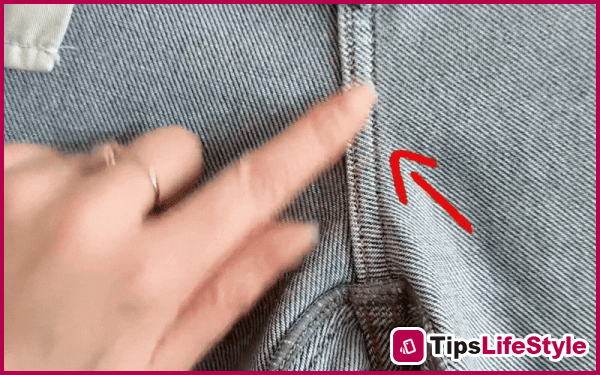
1. Check the crotch area: The secret to comfort.
Many people often complain about the discomfort and irritation of wearing jeans in sensitive areas, especially when moving around a lot. The main reason lies in the way the crotch seams are handled.
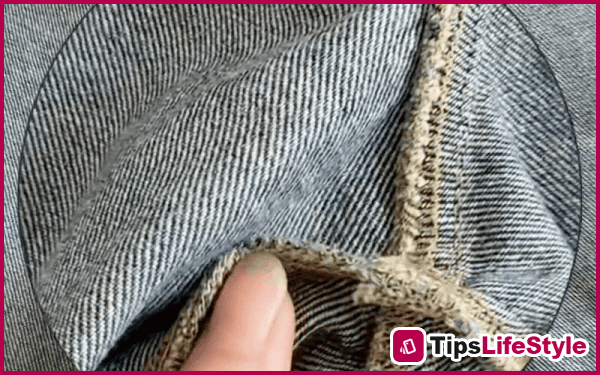
Poor quality jeans have crotch seams that are simply overlocked, creating vertical lines that easily chafe the skin when worn.
With cheap jeans (from mass-produced or factory-made items), to save costs and time, manufacturers often simply join the two edges of the fabric together and overlock the seam. The consequence is that this seam stands up, creating a rough, stiff ridge that constantly rubs against the skin. This is especially unpleasant for busy women who juggle work and picking up their children; wearing jeans that chafe like this is truly a nightmare.
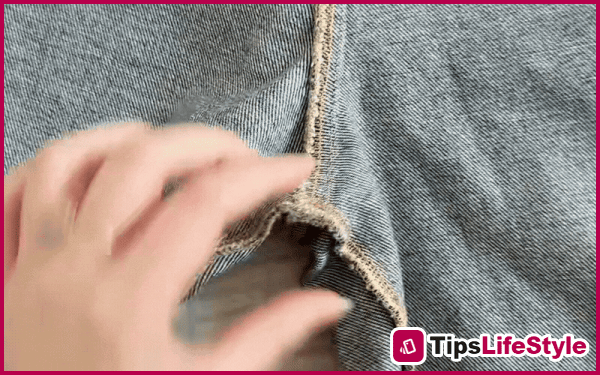
Conversely, in mid-range and higher-quality jeans, the crotch area is treated with a flat-felled seam technique. The two fabric edges are rolled together and sewn with two parallel, ultra-flat seams.
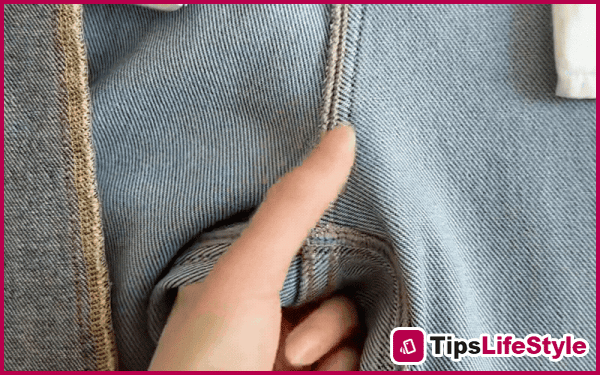
Mid-range quality jeans have a more refined crotch area, with the fabric edges rolled up and stitched in two parallel lines.
In high-end products, the edges of this fabric are also carefully finished. When you touch the inside, you'll find it smooth and soft, ensuring that even when worn and moving all day, you won't feel any discomfort.
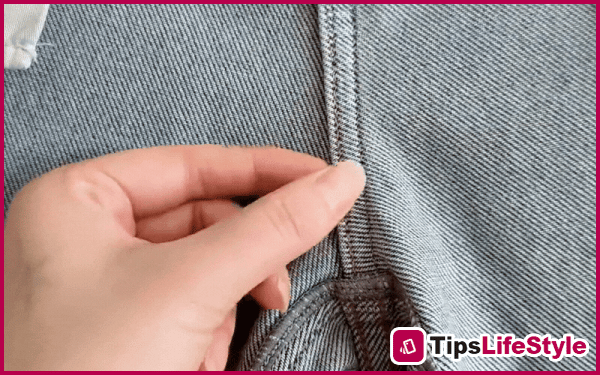
In high-quality, premium jeans, the crotch area is reinforced with a ribbed edge, preventing chafing and discomfort even during prolonged activity.
2. Examine the zipper area carefully: Subtle details from hidden corners.
Did you know that the zipper area is the clearest indicator of a tailor's skill level?
In cheap jeans, if you turn them inside out, you'll see the zipper is attached rather carelessly. The edges of the fabric are only haphazardly overlocked, sometimes with loose, dangling threads. The zipper often sticks and easily breaks after a few washes.
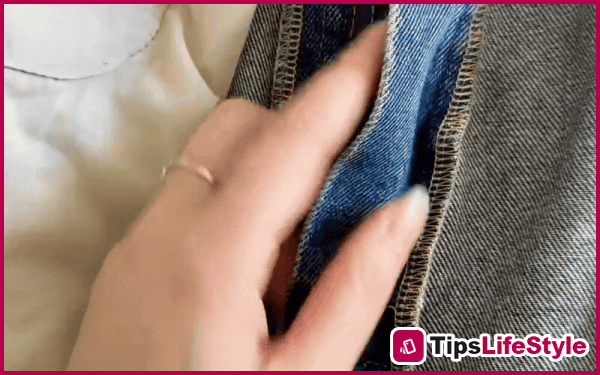
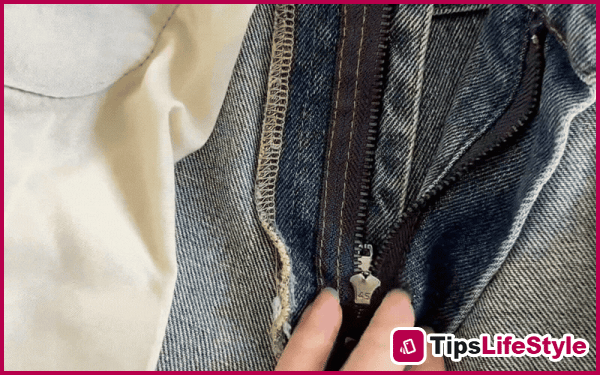
The zippers on low-quality jeans are often poorly sewn, with loose threads at the edges, and the zippers tend to stick and easily come undone after a few washes.
A well-made pair of trousers will use zippers from reputable brands that glide extremely smoothly. More importantly, the fabric edges around this area will be neatly finished with tight overlock stitching.
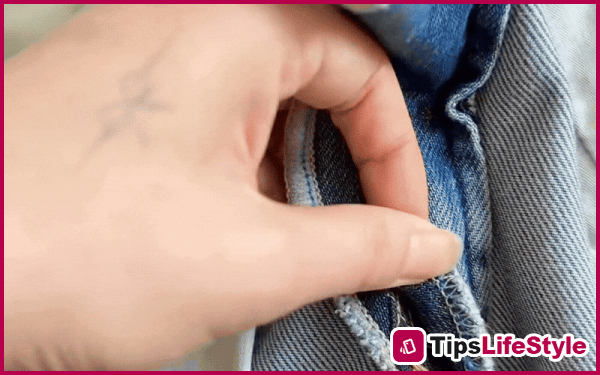
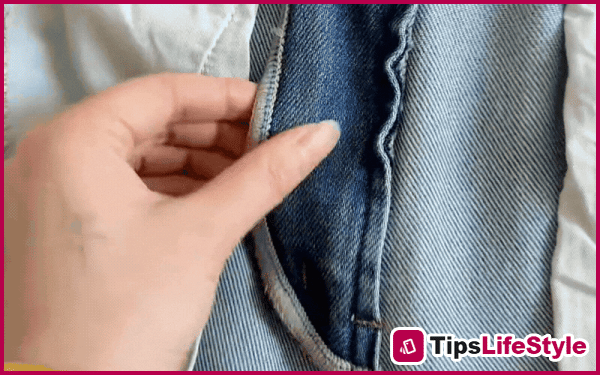
Looking at the edges of the zipper will give you a sense of the careful craftsmanship of the jeans.
Especially if it's a high-end, expensive pair of jeans, the inner zipper edge won't show any overlock stitching but will be "bound" with the same fabric as the jeans. Everything is neat, clean, and perfect with no awkward corners.
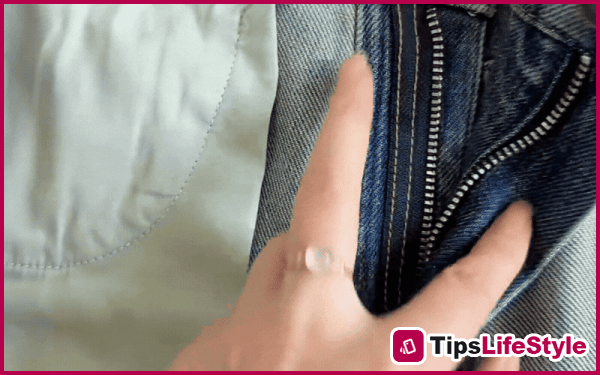
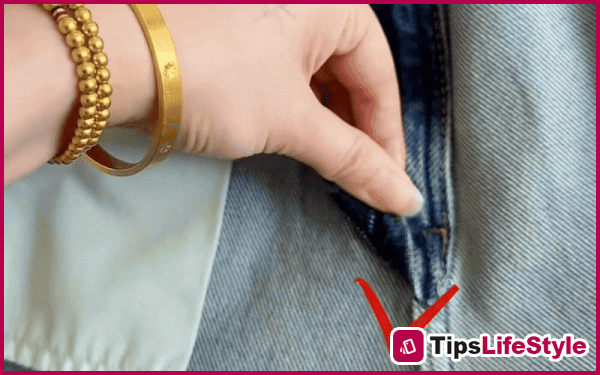
High-quality jeans have neatly finished seams with no visible loose threads, and the zippers are smooth and don't stick.
3. Feel the material lining your pants pockets: Don't let your keys puncture the pocket!
The lining of trouser pockets is a detail that few people pay attention to when shopping, but it directly affects durability. Cheap jeans often use extremely thin nylon-blend linings. When you put car keys, a phone, or sharp objects in them, the pockets can easily tear or get punctured with a large hole after only a short period of use.
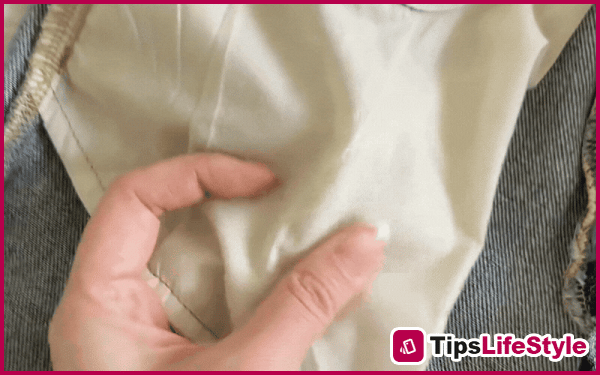
Cheap jeans often use extremely thin nylon-blend lining for the pockets, making them prone to tearing and chafing against the skin.
When inspecting pants, run your hand inside and feel the lining. High-quality pants will have a lining made from pure cotton, which feels thick and absorbs sweat well. The seams at the bottom of the pocket lining on high-end pants are also sewn inside out and hidden (no rough overlock stitching visible), providing absolute durability.
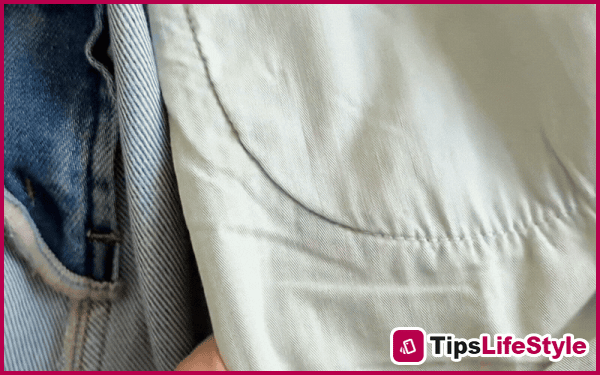
Good quality jeans look and feel very soft to the touch, with well-made stitching and pockets.
4. Observe the seams along the legs and hem of the pants: Key to maintaining the shape.
Whether a pair of jeans flatters the figure and makes the legs look slimmer depends largely on the side seam (the vertical line along the leg).
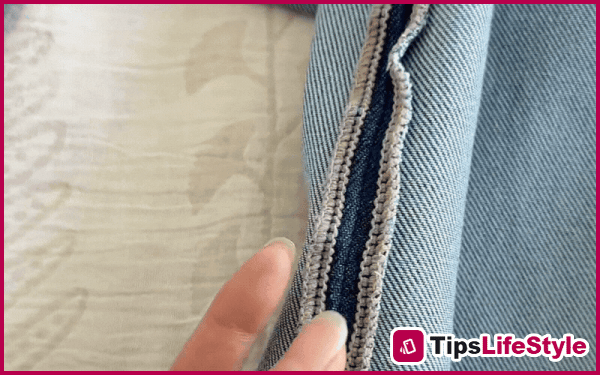
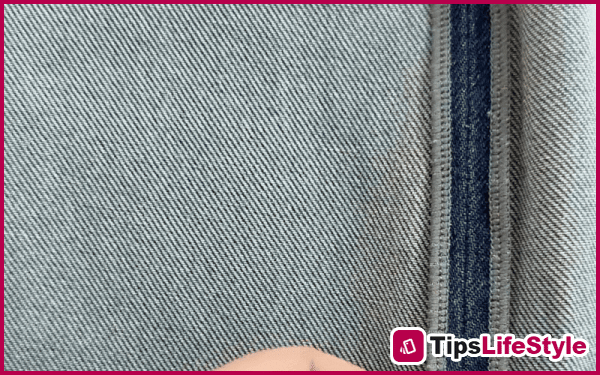
The vertical line along the leg of a pair of jeans also reveals a lot about its quality.
Poorly made jeans often use overlapping overlock stitching. When worn, the pant legs easily twist and lose their shape after a few machine washes. Meanwhile, good quality jeans use a "side seam" technique, where the two side seams are separated and secured. This seam gives the pant legs a perfect drape, a snug fit, and is incredibly flattering.
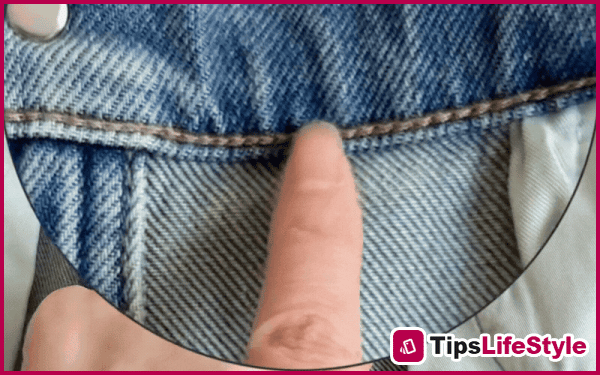
Paying attention to the stitching will tell you whether a pair of jeans is well-made or not.
In addition, the hems of high-quality pants are usually double-stitched and meticulously quilted with double needles. This sturdiness helps the pants maintain their upright, firm shape even after many years of wear.
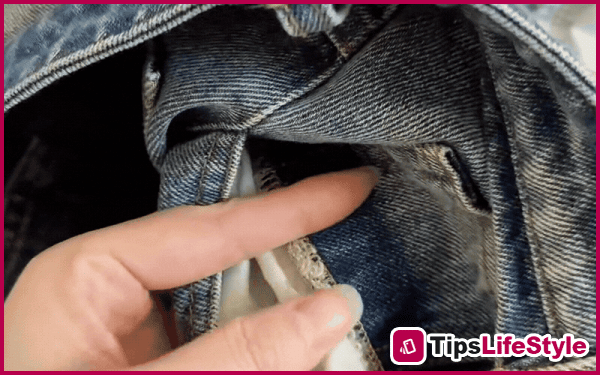
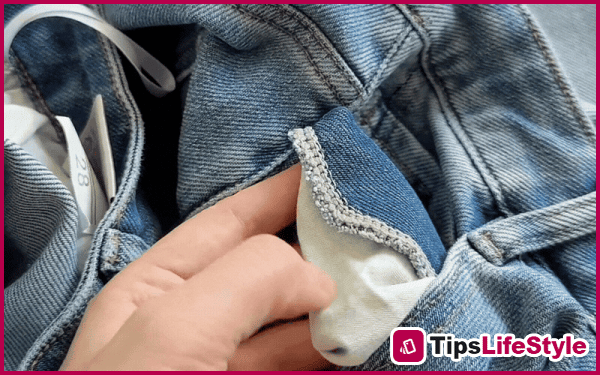
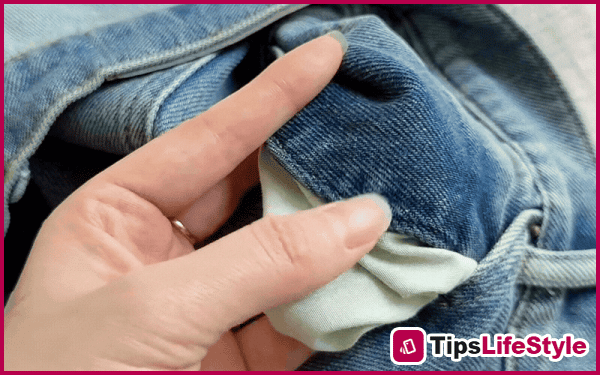
Looking at the seams on the front pockets can also indicate the quality of the pants. Poor quality pants often have simple overlock stitching with lots of loose threads, while high-quality pants usually have reinforced seams and are carefully and securely sewn.
Shopping isn't just about spending money; it's an art of investing in yourself. An expensive pair of jeans isn't just about the brand name; it embodies meticulous attention to detail in every stitch, material, and accessory, aiming to give the wearer the utmost confidence and comfort. As the saying goes, "you get what you pay for." Instead of buying ten cheap pairs that are itchy and wear out quickly, invest in one or two truly high-quality pairs. Simply apply the trick of turning your jeans inside out to check these four points, and you're sure to find the most worthwhile purchase!